


.jpg)
Ginkgo and DeepLife Partner to Unlock Causal Drug Mechanisms from High-Throughput Transcriptomics
Abstract
By combining Ginkgo's massive DRUG-seq data generation engine with DeepLife's TwinCell causal Virtual Cell model, biopharma researchers can now trace drug compound effects from target engagement to downstream gene expression changes.
The Next Frontier in Virtual Cell Biology
High-throughput transcriptomics has revolutionized how drug discovery specialists screen chemical libraries, but raw data matrices alone leave a critical question unanswered: which mechanisms do drug compounds actually affect in each cell?
To bridge the gap between high-volume data generation and biological interpretation, Ginkgo and DeepLife have partnered to bring causal, AI-driven Mechanism of Action (MoA) elucidation to the Virtual Cell Pharmacology Initiative (VCPI).
This collaboration pairs Ginkgo's VCPI high-depth DRUG-seq platform with DeepLife's TwinCell causal Virtual Cell model, giving drug discovery teams a mechanistic readout of what a compound engages, what else it moves, and the cellular pathways connecting the two.
Bridging Two Powerhouse Technologies
Ginkgo's VCPI is an open-science wet-lab platform that generates dose-response transcriptomic profiles across tens of thousands of compounds. Ginkgo captures whole-transcriptome depth per condition, at a fraction of the cost of conventional single-cell RNA-seq screens.
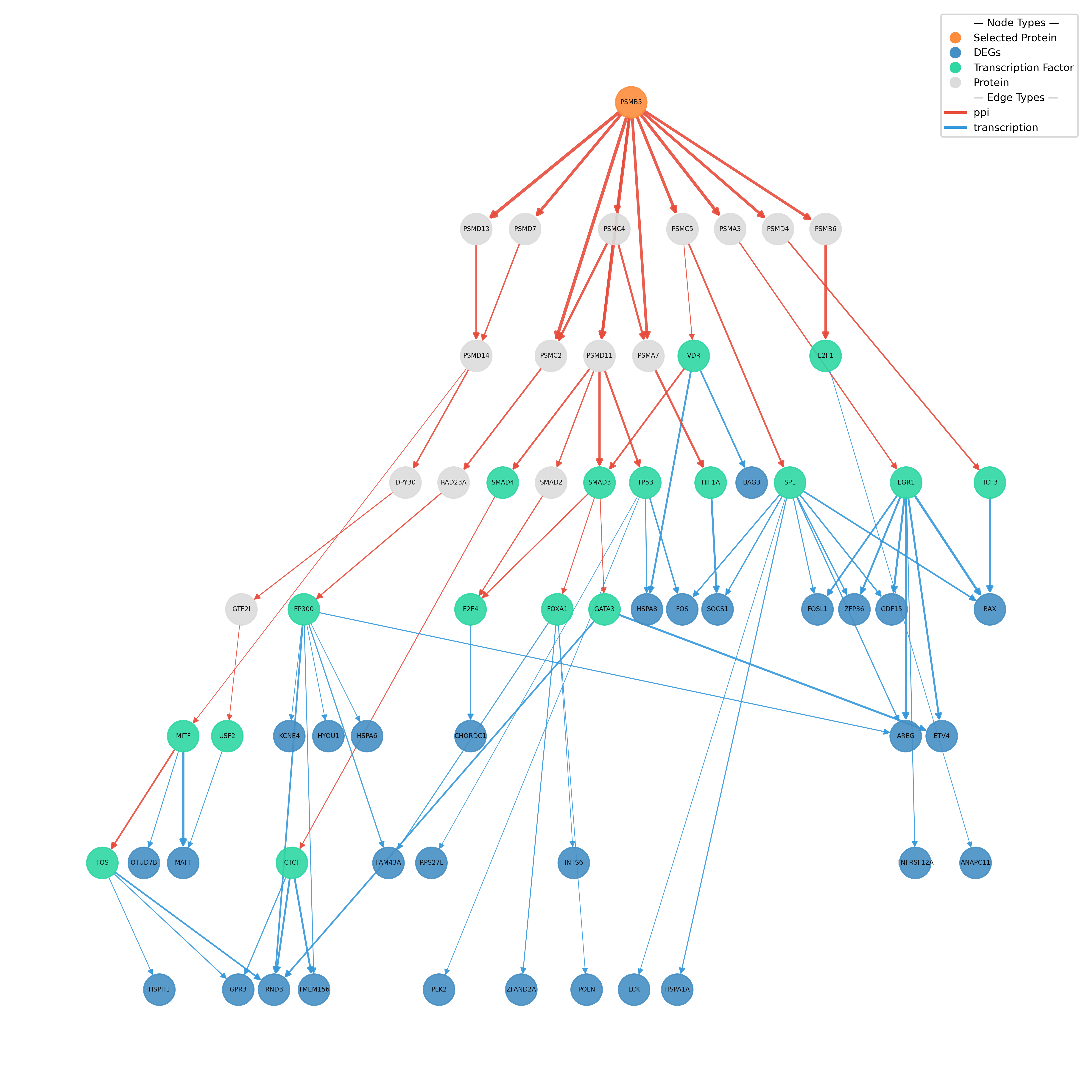
TwinCell is DeepLife's causal Virtual Cell model, built for reliable biological interpretation and target identification across disease and perturbation contexts. Trained on curated multi-omic interactomes and single-cell disease atlases, TwinCell maps the direct causal cascade flowing between a drug target and differentially expressed genes through intermediary proteins and transcription factors.
This joint capability converts static gene expression matrices into interactive and queryable causal graphs. The need for better mechanism characterization is well documented: around 90% of drug development programs fail in the clinic, with 40–50% of failures attributed to lack of clinical efficacy and a further 30% to unmanageable toxicity (Sun et al., 2022), both of which trace back to mechanisms poorly characterized at the outset.
To rigorously benchmark this integrated workflow, Ginkgo and DeepLife executed a pilot across several compounds with well-established mechanisms. Using gene expression data from engineered human cell models with clear dose-response profiles, TwinCell reproduced the true target mechanism and recovered its expected downstream biology.
What Happens Next on VCPI
As part of the collaboration, DeepLife will generate MoA reports for selected VCPI compounds. Each report will trace the causal path from a compound's target to the genes that respond, and set that mechanism in context by showing which biological processes the compound moved.
These reports will be public and featured as part of VCPI. With each annotated release, more of the initiative's compounds come with not just an expression profile, but the mechanism behind it.
Taking TwinCell Further
The VCPI reports are one application of TwinCell: explaining how a compound produces the effect observed in a screen. Applied to a disease contrast instead, the same causal model identifies and validates therapeutic targets, and assesses where a mechanism may hold across indications.
Teams with data of their own can request access to the TwinCell API and run analyses on their own datasets, retrieving ranked targets and causal graphs programmatically.
Identifying the right therapeutic targets is the highest-leverage decision in a discovery program, and the hardest to correct once it is underway. For partners who want that decision grounded in mechanism, we run service engagements and joint discovery programs: TwinCell applied to your own data, across target discovery, validation and indication expansion, including dedicated and on-premise deployment. Get in touch with us directly at hello@deeplife.co.
Partner with DeepLife to bring virtual cell technology into your discovery programme.